Jay Kendrick Wins Lake Guntersville Rayovac
He said the majority of his weigh-in fish were suspended off of creek channel bends in North Sauty and South Sauty creeks, but they were all focused on groups of big shad in the area. As he reeled his bait along, he could feel his line jump, which he interpreted as the shad bumping into his line. "What I think was happening is as I was reeling through those groups of shad, the bass would start tracking the swimbait and as they'd get close to the shad, they'd get nervous and the shad would start bumping into my line," he said. "When I started to feel hard bumps on the line, I could almost call it that soon my line would load up like crazy." Kendrick employed the process of elimination approach in practice. "I did a lot of practicing, but with that said I didn't practice on any place where I caught 'em later on," he said. "I had an idea because I live here and because I've been doing this a while what the fish should be doing. I stayed away from those spots. "Wanted to exclude everything but that so I stayed shallow in 2 to 12 feet. I knew if fish moved up, I could adjust accordingly. When that didn't happen, it gave me a clear picture. I moved out deeper and knew fish would be feeding aggressively." He idled over the bends in the creek channel in both North and South Sauty and saw plenty of bait present. "I never wet a hook there in practice," he added. "Any time you're practicing, you're practicing by exclusion. I knew what the fish had been doing and if anything they were going shallower to get ready to spawn. If I could exclude that that was a key because the big fish weren't up shallow. It worked out just right."
Competition:
Kendrick said he had five schools of fish and bait pinpointed for the start of the event and with more than 200 boats in the tournament, he wanted to take his time going down his checklist. "I didn't want to burn through them," he said. "I wanted to manage those fish." He stayed on one 80- to 90-yard long stretch where the creek channel turns and went back and forth all day long. He went two or three hours without a bite at one point, but as soon as the TVA started generating current, the fish got active. "It was like a light switch," he said. "I knew I could catch 18 pounds up shallow, but I couldn't win with that. I knew I needed a 5-pound average to give myself a chance and those better fish were out where I was." He was pleased with 25-06 to start. He didn't have to be leading right off the bat and he knew he still had places he hadn't fished yet. "It gave me a lot of confidence in knowing that the fish were still out there around the bait," he said. "In another week, it'd be a different story. Those fish wouldn't have been out there. There's a two- to three-week window of the year when this technique is effective." He said a string of cold weather recently had dropped the water temperature and stalled the fish heading to their spawning flats. A warming trend right before the tournament had the shad grouped up and fish got active.
To start day 2, he went back to the same area he fished on Thursday. "I figured that I'd caught 25 (pounds) but I probably didn't catch them all," he said. "I caught a good one quick and I ended up fishing there and two or three other places, but none of my deeper holes. I focused on some isolated areas and I wound up catching them all in the same general area." His 26-10 moved him into 3rd place, a little more than 3 pounds behind Hall, who led after day 2. "I was very comfortable knowing my weight had gone up and not down," he said. "I still had four other places to pick from that I hadn't fished yet." His day 1 spot didn't produce a bite in the first two hours on the final day so he moved to an area where the channel made a turn in North Sauty Creek. The shad were piled up on the turn and there was some rock on the bottom. He lost a good one about 30 minutes in, but once the current picked up, he caught nine fish in half an hour that wound up weighing about 28 pounds. "Those fish were oriented to deeper creek channels and areas with rock and areas with deeper water near shallow water," he said. "But the big ingredient were the big gizzard shad." On the way back to weigh-in, he stopped to fish a duck blind where he'd broke off a good fish in practice. On his second pitch with a jig, he stuck a 6 1/2-pounder that allowed him to cull a 4 1/2-pounder and got him over the 31-pound mark.
Winning Pattern:
Kendrick said it was key to pay attention to how the shad moved through the water column over the course of the day. "I had my boat in 30 feet of water and the time of day would determine what depth the shad were," he said. "The fish were usually in 17 or 18 feet and the shad were 15 feet deep. In the morning, the shad were closer to surface and they moved down through the day. "The edges of the turns in the creek channel would be 13 feet and the shad would slide off that shelf into deeper water and the bass were suspended under there."
Winning Gear:
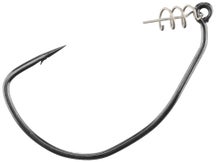
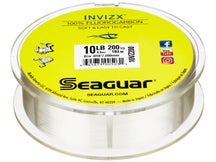
Swimbait gear: 7'11" medium-heavy G. Loomis swimbait rod, Shimano Chronarch E casting reel (6.4:1 ratio), 25-pound Seaguar InvizX fluorocarbon line, 3/8- and 3/4-oz. unnamed tungsten bullet weight (pegged), 10/0 Owner Beast hook, 8" Scottsboro Tackle Company custom-poured swimbait (pearl belly/orange throat/Houdini back), 3/8- and 3/4-oz. Buckeye Jigs J-Will swimbait head, 7" Basstrix paddle tail swimbait (shad). He varied the weight on his swimbait depending on the time of day and the depth the shad seemed to be in. "I went lighter in the morning and heavier in the afternoon as they slid off that shelf," he said. He used to throw swimbaits on braided line, but has since switched to fluorocarbon. He opted for a bit heavier line at Guntersville just for peace of mind. "I stepped up to 25-pound because of the caliber of fish I was catching. I wasn't comfortable with 20-pound," he said. Kendrick on why he mixed up baits: "I felt like it was important to show the fish something different. Having two different baits that I had confidence in, I felt like I changed up enough to keep them interested." It's worth noting that Jonathan Henry won the Southeast Rayovac at Guntersville last year using a swimbait made by Scottsboro Tackle Company.
Main factor: "One of the big things in my career and I've had to learn this since moving to Guntersville 10 years ago is how to catch suspended fish. Guntersville is not like Oroville and Smith Lake where you catch them on 6-pound test on drop shot. The water has a lot of color to it and throwing a 6-inch Roboworm is not my idea of how to catch winning-quality fish. I've had to learn how to fish a bulky bait and getting it into and keeping it at certain levels in the water column. I've really worked on that and that's been a key. Catching suspended fish is a whole different ball game from flipping and pitching."
Performance edge: "My electronics were vital because without knowing where that bait was located, I wouldn't have found those fish. I have three Lowrance HD-9 Touch units and in practice, I didn't fish those areas, but I idled through looking for bait. Had those bait fish not been there, I wouldn't have had the success I did. Those fish weren't just scattered everywhere. There had to be bait in the areas."
Lake Guntersville Winning Pattern BassFan 3/24/15 (Todd Ceisner)