Mark Daniels, Jr. Wins Bassmaster Elite Lake Oahe
Mark Daniels, Jr's Winnin Pattern, Baits & Gear
"It feels awesome," he said. "It's a lifetime of work wrapped up in one blue trophy. You never could have told me that I'd win in South Dakota on a smallmouth lake, but things just worked out this week, from the areas I fished and what I found to not losing any fish that would cost me." After winning the TBF National Championship 2013, Daniels was granted an all-expenses paid exemption to the FLW Tour for the 2014 season. After getting a taste of the sport at the highest level, he opted to leave his job as an agricultural biologist with Solano County near San Francisco and relocate to Tuskegee, Ala., to be closer to his wife's family and minimize travel expenses for future tournament seasons. It was a leap of faith in many ways and a major commitment knowing there were no guarantees of a payoff. After two more seasons on the FLW Tour, Daniels qualified for the 2017 Elite Series and acquitted himself nicely, earning a Bassmaster Classic berth in his rookie year. He hopes this win serves as a quantum leap in his career. "I'm still taking it in. It hasn't hit me yet, but it's damn great feeling," said Daniels, who has two children and will turn 37 later this month. "One hundred percent, I feel like I made the right decisions. It would've been so easy for me to just keep working as an ag biologist. I had a good job and a family to support. Those decisions are hard to make, but I followed my heart and this is where we are."
He was 40th in points heading to Oahe after a disappointing 88th-place finish at the Mississippi River the week prior. He was anxious to get back on the water, regardless if it was at a venue he'd never seen before. "I didn't know they had bass there let alone 5-pound smallmouth and everything else they have running around," he said. "After the Mississippi, I wanted to hurry up and fish again to get over that bad one, but I didn't let it get me down. I love fishing that way - frogging and flipping. It's how I grew up. I had a good day 1, but choked on day 2. "I came to South Dakota and it was a new week. I put the Mississippi behind me and said, 'I'm gonna start over' and pulled out my spinning rods." What follows is a recap of how he put those spinning rods to work on the smallmouth of South Dakota.
Practice:
Two key factors emerged during practice for Daniels. One was that the shallow-water bite was quickly fading away, prompting him to rely more on his electronics in his search of offshore holding spots. "I did fish shallow quite a bit and caught a lot, but they were small," he said. "That told me the females had already dropped eggs and were going deep." The other was because Oahe is so big and the blast off point was toward the south end of the lake, he wanted to make sure he was targeting water that had not been tapped into already. That meant running farther north than most were comfortable with given the conditions.
"The best decision I made took place in practice when I saw where we were leaving from, I knew guys would opt to stay close to the ramp," he said. "I had no history there so immediately I knew I wanted to get away from people. That was the biggest key for my success. Granted, a few other guys had the same idea, but we got away from the bulk of guys. "That's bass fishing 101. These guys are too good. You can't sit there on a place with three or four of these guys and share fish. You won't make the top-50 cut." As he worked his way up the lake in practice, he ruled out a 25-mile stretch that seemed devoid of any meaningful smallmouth population. "I tried to practice there, but couldn't catching anything," he said. "Other guys worked up the lake in practice and found it stunk and turned around. I ran even farther and found some fish."
Competition:
The opening day of the tournament saw stiff winds turn Oahe into a veritable Great Lake. It impacted Daniels' day, but not until he had 18-12 in his boat. "It was rough getting up there and getting back," he said. "I caught my weight pretty quick and I gave myself three hours to get back." As the day wore on, he experienced fish-care issues and he checked in two hours early on day 1, but still found himself in 2nd after the scales closed.
"I was making 100-mile round trip run and there's so much that can go wrong doing that," he said. "You have to have the best equipment to get there and get back and have the right stuff to have things go your way." His tactics were two-fold - the Ned Rig, a finesse presentation that has gained more and more momentum in the past couple of years, along with a dropshot - and both had his eyes glued to the screen of his Garmin electronics. "It was similar to Mille Lacs and similar to Lake Martin earlier this year since I was catching spots in the same manner," he said. "I've gotten more and more familiar with my electronics and they've made my life so much easier. Those Garmins are extremely user friendly. I grew up without electronics so I can use them and understand them, anybody can. They're that good."
Day 2 didn't get started until after a 90-minute delay due to wind in the wake of a nasty band of storms that passed through Pierre after day 1. It put a little bit of pressure on those heading north to catch their weight quickly, Daniels included. Turns out the delay caused him no issues as he produced his best bag of the event with 20-04 that helped him take over the lead. He started to get more dialed in on where the fish were coming to after they departed their spawning grounds. "The points I fished in tournament were an intersection and a rest stop for them to feed up and slide off the points," he said. "I think I intercepted them perfectly." He relied on four particular spots throughout the tournament, all in the 13- to 18-foot range with scattered boulders, chunk rock and some isolated brush.
"Those smallmouth are weird," he said. "There will be four to six of them holding on one rock. I don't know why, but they seem to be very conscious of the shade that rock creates." A 17-06 effort on day 3 extended his advantage to 6-05 entering the final day. What many saw as a foregone conclusion Daniels didn't even acknowledge. He said he treated day 4 as though he was in 12th place and tried to climb as high as he could in the standings. "I never backed off," he said unflinchingly. "I fished for big ones all day. I caught three good ones and two small ones. (Clifford) Pirch was on fish to win, but he had a bad day 1. I knew that potential was out there so if you slip up and lay up for 10 or 11 pounds, that won't work. It was a struggle on day 4." As the tournament wore on, he sensed the fishing was getting tougher as other competitors were also in the same general area of the lake. "It was the same each day, but it just got tougher because the pressure increased as the tournament wore on," he said. "It gradually got tougher from getting bit to a limit to everything. (On day 4), the pressure started to set in. Every day, we were snatching give out of there so I knew that was going to wear on a few spots."
Winning Gear:
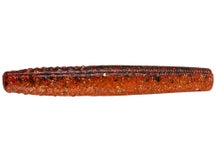
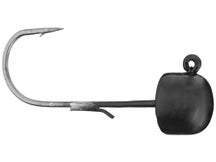
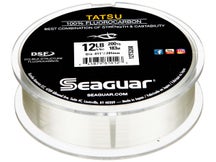
Ned rig gear: 7'1" medium-heavy Favorite Fishing Sick Stick spinning rod, 2500 spinning reel, 15-pound Seaguar Smackdown braided line, 8-pound Seaguar Tatsu fluorocarbon line (leader), 1/5-oz. Z-Man Finesse Shroomz jig head, 2.75" Z-Man Finesse TRD (green-pumpkin goby, mudbug).
He stayed with the Finesse TRD after having success with it in practice. "Even when they started nipping it, it's so small you'd still get them on it," he said.
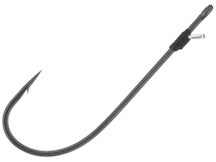
Dropshot gear: 7'2" medium-heavy Favorite Fishing Jack Hammer spinning rod, same reel, same line, #1 Owner Cover Shot hook, Z-Man Finesse WormZ (green-pumpkin), 3/8-oz. unnamed dropshot weight.
Daniels Texas-rigged the Finesse WormZ when fishing around brush. "It was scattered, but it was out there," he said. "And there were some fish around it."
He also had a dropshot rig with a Finesse TRD on it.
He estimated nearly half of the 20 fish he weighed in were caught by vertically dropping down on the fish versus casting to them, which was the dominant theme on the final day.
Main factor:"Getting away from the crowd and being able to rely on my electronics and stay off the fish and not be on to top of them when they were finicky."
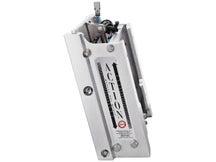
Performance edge: "My Ranger Z520L and Mercury 250 along with my Bob's Machine Shop jack plate were flawless all week. They got me there and back safely each day."
Bassmaster Elite Tour Lake Oahe Winning Pattern BassFan 7/6/18 (Todd Ceisner)
Casey Ashley's Pattern, Baits & Gear
The problem was, as the tournament wore on, certain areas got fished more intensely than others. "If you had enough stuff that people weren't fishing, you'd be a lot better off," he said. "I don't think that was the case for anybody." The other factor was the wind, which was quick to muddy up certain stretches.
"You to find a place that didn't muddy up and had have to rock," he said. "That seemed to be the only thing to get around." He targeted points with scattered rock on the end. He started the tournament by snapping a tube since that's how he caught fish in practice, but a series of lost fish prompted him to switch to a Carolina rig and a dropshot to mix it up. "I had not caught any offshore in practice," he said. "I caught them on a dropshot day 1 and lost a big on a tube and I figured there had to be something better than that tube."
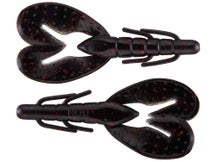
With the ball and chain rigged up for day 2, he logged 20-06, which was the heaviest bag across the first three days. His best area was up toward Forest City and it had a dropoff from 15 to 24 feet and as long as he fished a Zoom Speed Craw on the Carolina rig slow along the bottom, he got bites. "The Speed Craw is small and compact and smallmouth love it," he said. "When they eat it they get it. Fishing that deep, I couldn't fish it really fast. I could feel the rock with that big weight." Aside from one day-1 keeper that fell for a tube, the rest of his weigh-in fish were split between the Carolina rig and dropshotting a Zoom Meathead or Z Drop.
Gear:
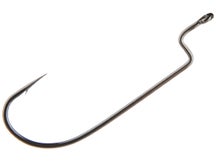
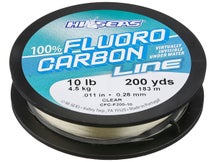
Carolina rig gear: 7'4" heavy-action Quantum Vapor casting rod, Quantum Smoke S3 casting reel (7.3:1 ratio), 17-pound HI-SEAS fluorocarbon line, 3/4-oz. tungsten barrel weight, 3/0 Owner offset worm hook, Zoom Speed Craw (green-pumpkin, green-pumpkin purple).
Dropshot gear: 6'10" medium-action Quantum Tour PT Special Issue spinning rod, Quantum Smoke S3 size 30 spinning reel, 10-pound HI-SEAS braided line, 8-pound HI-SEAS fluorocarbon line (leader), 1/0 Owner Cover Shot hook, Zoom Meathead (green-pumpkin), Zoom Z Drop (green-pumpkin), 3/8 oz. clip-on and tie-on dropshot weights.
Main factor: "Just finding a few key areas. That was the deal."
Performance edge: "My Triton and Mercury. Making those long runs on that rough water, having that combination was a big key."
Bassmaster Elite Tour Lake Oahe 2-5 Patterns BassFan 7/6/18 (Todd Ceisner)
Clifford Pirch's Patern, Baits & Gear
It wasn't any particular sequence on day 1 that proved costly, but he forgot to put his pedestal seat on the deck before leaving the dock and that made it challenging to even stay on his feet in the rough water. "Even sitting down, it was hard to hold on," he said. "It was a combination of things. I made some mistakes and had some things happen. I lost a bunch of fish in a row. It was just a mess, a real train wreck."
With the waves building and wanting to make sure he didn't risk being late to check in, he left the area only to realize later that the wind had slacked off and he may have been able to stay. "Losing that many didn't matter with as many as where there," he added. "From practice, it seemed hard, but I could've lost six more and caught a decent bag if I'd just stuck to it."
On day 2, he returned to the same area and realized what was there. His 18-04 stringer rallied him from 87th to 18th. "On day 2, as I moved deeper it got better and better," he said. "I'd caught a couple big ones in practice really deep and I thought that was the deal, but it was so few and far between and it was so hard to find them. I was in a bad region to start with. "You could be in the wrong part of the lake with the right bait and right depth and just not catch them."
Pirch focused on depths ranging from 25 to 45 feet, he was catching fish heading out of a bay toward the main river. "I was fishing a lot deeper (than most)," he said. "Three were quite a few guys that did well in the bay, but those fish were coming out and I was where they were heading."
A dropshot was his main technique with a variety of presentations and baits depending on depth. He was even able to catch a few toward the surface as they chased bait up through the water column. "Everything was going on," he said. "It was the best scenario you could ask for. Everything I weighed in was all using my electronics. I was dropping to fish that were suspended or dropping on fish on the bottom. They were biting. It was fun. "The spot was within a half mile stretch and they move around quite a bit. I'd get little flurries. It seemed like there were different groups of fish. There'd be a bunch of 2s to 3s then 3 1/2s to 4 1/2s. They'd be in little wolfpacks."
Gear:
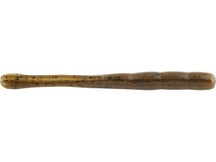
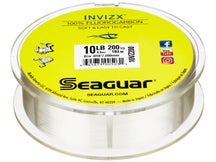
Dropshot gear: 7'6" medium-action Phenix Rods Ultra MBX and Feather Series spinning rods, Ardent C-Force spinning reels, 20-pound Seaguar Smackdown braided line, 8-pound Seaguar InvizX fluorocarbon line (leader), #2 Hayabusa Power Wacky Hook, Roboworm Ned Worm (natural green colors).
He also wacky-rigged a Senko on a #2 Roboworm Rebarb hook above a 1/4- or 3/8-oz. dropshot weight.
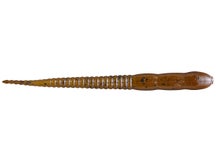
He also had success with a straight-tail Roboworm and a shad imitating bait on a dropshot.
He'd lost a couple fish on a 7'2" rod on day 1, which prompted the switch the longer versions.
Main factor: "I had to pray for guidance after that first day and get my head together. It was a mega meltdown for me and I had to have peace of mind to get back to it. When you go from 7 pounds and 87th and end up 3rd some stuff has to turn around. I did a lot of praying for guidance and a sound mind because I didn't have it the first day."
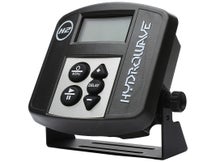
Performance edge: "I felt like my rods were key and also the Lowrance unit. We're seeing everything that's down there these days. It's phenomenal what you can see. I also used the HydroWave and it seemed to worked when they got in a funk."
Bassmaster Elite Tour Lake Oahe 2-5 Patterns BassFan 7/6/18 (Todd Ceisner)
Boyd Duckett's Pattern, Baits & Gear
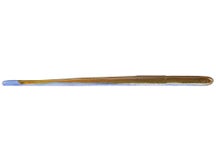
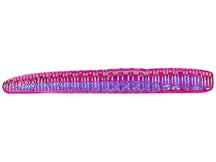
During practice, he started fishing shallow and got a ton of bites, but knowing the full moon was Wednesday night, he figured the fish that had moved up to spawn prior to that would be heading back to their offshore haunts before long. "I knew they were leaving so during the second half of the first day of practice, I looked offshore," he said. "You had to look and look until you found one. I wound up with three schools." From there, he mixed up a dropshot with a splitshot rig and used a Damiki Rig-esque set up to target suspended fish on days 1 and 2. "All of the schools were related to the ends of long points and two of them had around them," he said.
On day 3, one of the groups had moved up out of deeper water and were on the point in roughly 28 feet. By the final day, the cumulative effect of the fishing pressure started to show itself as it got tougher to get bites. "The fish were there, but they were hard to catch," he added. "The biggest thing was not boating those magical bites (on day 4). I was proud to have found them and hook them, but it was disheartening to have them get away."
Gear:
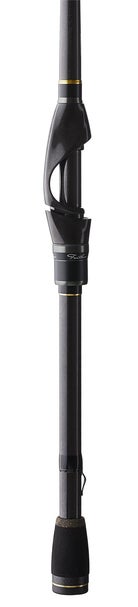
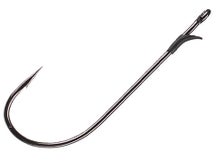
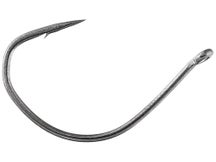
Dropshot gear: 7' medium-action Duckett Fishing Black Ice spinning rod, unnamed spinning reel, 6- and 8-pound Vicious Fishing Pro Elite fluorocarbon line, #2 Gamakatsu dropshot/split shot hook, Gary Yamamoto Custom Baits Shad Shape Worm (black/clear pepper), 3/8-oz. unnamed dropshot weight.
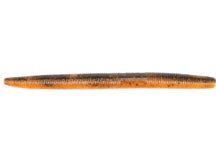
He also had a Shad Shape Worm rigged on a 3/16-oz. Gamakatsu darter head and fished it similar to a Damiki Rig for suspended fish.
In addition, he fished a Senko on a splitshot rig and dragged that through the water column to entice suspended fish as well.
Main factor: "Recognizing that offshore fish would come to us all week and having the fortitude to look for it. There were only 12 to 15 guys who did it because it was non-existent early. You had to have lot of confidence to keep looking. Once found em, you had to keep at it."
Performance edge: "I have one of the new Mercury 4-strokes and it is such a great performer. It holds the boat really well in waves and on turns. It holds the nose up and you don't lose near as much speed as you used to."
Bassmaster Elite Tour Lake Oahe 2-5 Patterns BassFan 7/6/18 (Todd Ceisner)
Dean Rojas' Pattern, Baits & Gear
"On the big water, it's a matter of who will run the furthest to get away from the pressure and pressured fish," he said. "Going to a new body of water, we had no preconceived notions. We were fishing on the fly and nobody knew what it would take. "Most guys said if they caught 14 pounds they would've been excited. For me, I figured 17 to 18 would give me a chance because there was no baseline. That's the beauty of the lake and going somewhere we've never been to before. A lot of people were looking forward to this event and anticipating really big weights, but for the anglers who did well, they took what the lake was willing to give them instead of what it was supposed to." He opened the tournament in an area he felt had potential to produce 15 or 17 pounds. Instead, it kicked out 13-00 and he knew he had to make a change for day 2.
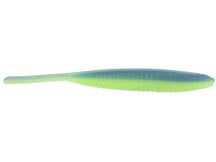
"I gambled and ran a long ways and they were there," he said. "I figured out where I needed to be and what to throw." His most effective technique was a 4-inch stick bait on a dropshot in 15 to 22 feet. "It was typical post-spawn," he said. "A lot of fish I caught were spitting up minnow. I also caught a couple topwater and jerkbait fish when they'd start schooling. Just the fact that you were around them helped. There were walleye boats everywhere so you just had to get it close to (the bass) and they were going to bite it."
Gear:
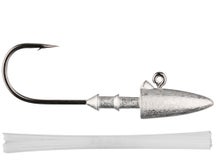
Dropshot gear: 6'9" medium-heavy Duckett Fishing Terex Dean Rojas series spinning rod, Daiwa Exist 2500 spinning reel, 8-pound Sunline Super FC Sniper fluorocarbon line, 3/0 Gamakatsu EWG worm hook, 4" Big Bite Baits Cane Stick (watermelon red), 1/4- and 5/16-oz. Epic Tungsten dropshot weights.
He also mixed in a nose-hooked hand-poured wormed rigged on a Gamakatsu TGW dropshot hook.
He also caught a couple key fish earlier in the tournament on a jerkbait after fish came up schooling on a shoal.
Main factor: "Abandoning the area I was in on day 1 and fishing for the right ones to carry me through a 4-day event."
Performance edge: "My Lowrance units helped me see everything down there. My Suzuki got me there and back, running 450 miles all week along with my Blazer boat, which got me there safely."
Bassmaster Elite Tour Lake Oahe 2-5 Patterns BassFan 7/6/18 (Todd Ceisner)