Whitney Stephens Wins BASS Open Harris Chain
Whitney Stephens had a rough time at the 2016 Bassmaster Classic, which he qualified for by winning a Northern Open at Lake Erie the previous summer. The Ohioan caught less than 4 pounds worth of keepers over two days at Oklahoma's Grand Lake and finished 53rd - just two slots from the very bottom of the standings. He admits that he was affected by all of the hoopla surrounding the event. "Fishing was actually the easiest part," he said. "The extra activities were tough - appearances here, meetings there and all the media stuff.
"I had a really good practice, but then the weather warmed up and it didn't work out and it just crushed me. I made a promise to myself to do whatever it took to get back because I wanted another shot at it." He'll get that second opportunity provided he competes in the three remaining Eastern Opens this year, which he fully intends to do. The "win and you're in" scenario is back for the circuit for 2019 and his dominant victory at the weather-shortened opener at Florida's Harris Chain of Lakes (his margin over runner-up Bryan Schmitt was 11 1/2 pounds) earned him a reservation for the 50th anniversary edition of the Classic in 2020, the location of which is still to be announced.
Practice:
Stephens, who'd never visited the Harris Chain previously and had competed in Florida just once before (last year's Eastern Open at Lake Toho), put in six days of practice for the event. That's one more than is his normal routine for an Open, but he needed the additional time to break in the motor on his new boat. He sampled Lake Harris and Little Lake Harris on the first day, but decided they contained too much hydrilla and the fish would be too difficult to pin down. He tried Lake Eustis the following day and found much less of the green stuff, but the grass that was there was holding quality fish in good numbers. He and travel partner Steve Robbins, who competes in the co-angler division, combined to get about two dozen bites on reaction baits, including a 6-pounder and a 5.
A trip to shallower Lake Griffin the next day revealed some fish that had moved onto beds and he and Robbins caught a few flipping, but their best five would've combined to weigh approximately 13 pounds. With a major cold front on the way, he surmised that few big females would commit to the spawn in the coming days and his best bet was to stick with offshore hydrilla in 8 to 10 feet of water. He ended up finding 11 stretches of grass in Eustis that he deemed had potential. "Some of them were large - like maybe a quarter-mile long," he said. "Some weren't more than about 50 yards by 20 yards. The larger ones we really fished thoroughly to find the key little areas in them."
Competition:
Stephens had a late boat draw for day 1 - he was No. 188 in the 226-angler field. There was a boat on the place where he wanted to start when he arrived, so he ran some other places and caught a few decent fish on worms drug through the grass, including a 5-pounder. A run of big ones at midday boosted his weight into the 24-pound range and he continued to cull at almost every stop. He stopped fishing at 2 o'clock - 3 hours before his check-in time, with an 8 1/4-pounder, a 7, a 6 and two 5s in his box. "I'd never had fish that size in my livewell before," he said. "They were stacked on top of each other and there wasn't any room left. It was crazy."
Day 2 was considerably slower - a scenario he attributed to another cold night dropping the water temperature an additional 3 degrees (to 58), plus a much stronger north wind and a total lack of sunshine. He never caught more than two keepers at any stop and didn't fill his limit until noon. At his final stop of the day he used a spinnerbait to catch a 7 1/2-pounder and a 3 1/2 that replaced a pair of 2s in his livewell. "It was a place we found late on Monday during practice and I didn't fish it on day 1. Right when we got there we had a double hookup - I caught the 3 1/2-pounder and my co-angler got a 5 3/4. "I was saying that I thought I still needed another good bite and right as those words were coming out of my mouth, the 7 1/2-pounder bit."
Winning Gear:
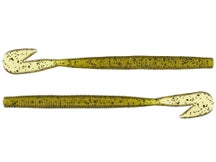
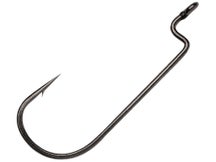
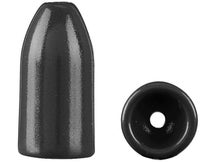
Worm gear: 7'3" heavy-action Kistler Z-Bone rod, Shimano Metanium MGL casting reel (7.4:1 ratio), 15-pound Berkley Trilene 100% Fluorocarbon Professional Grade line, 5/16-ounce VMC tungsten weight, 5/0 VMC Ike-Approved heavy-duty worm hook, Zoom Magnum Trick Worm (junebug) or Zoom Magnum Speed Worm (green-pumpkin).
Spinnerbait gear: 7'1" medium-heavy Kistler Helium rod, same reel (6.3:1), 17-pound Berkley Trilene 100% Fluorocarbon, 3/4-ounce custom-made spinnerbait (transluscent gold with tandem willow-leaf and Colorado blades).
He got the spinnerbait from Kevin Martin, a fellow competitor also from Ohio. It was manufactured at a store in South Point called The Tackle Box. "He had six of them and he gave me one and I caught one weigh-in fish with it on Friday and two on the second day, with one of those being the kicker.
Main factor: "Realizing early on that the big fish wouldn't be on the bank and learning as much about the offshore hydrilla as I could. I wasn't married to one place - I kept moving."
Performance edge: "In that wind, no doubt it was the Minn Kota trolling motor. The Lowrance graphs were important, too."
BASS Open Harris Chain Winning Pattern BassFan 1/29/19 (John Johnson)