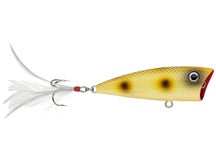
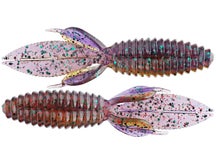
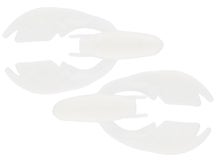
FLW 2016 Winning Patterns
Bradley Hallman Wins FLW Tour Lake Okeechobee
Bryan Thrift Wins FLW Lake Norman Tour Invitational
Thrift said he didn't feel any additional pressure being considered one of the local favorites entering the event. He was one of 21 competitors from North Carolina. "I practiced and fished pretty relaxed," he said. "I was surprised because I usually do put extra stress on myself being close to home. I was calm and collected." The field was limited to three days of practice - the Invitationals follow FLW Tour rules - and Thrift went in wanting to learn something new about the lake. "My mindset was I wasn't going to fish stuff I already knew," he said. "I tried to find new places and that helped a lot." He found that fish were still generally locked in their late summer pattern, schooling in the mornings and holding on shallow and deep brush piles and, of course, docks. "The biggest thing was looking for schooling fish," he added. "I ran around a lot looking for that and never found it." By the end of practice, he'd caught a 5 1/2-pounder and a few 3-pounders, enough to get him thinking that a daily average in the low teens would be competitive. "The way practice went I thought the weights would be better," he said. "I figured it'd take 13 1/2 per day to win."
Competition:
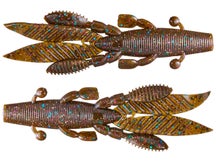
Thrift didn't hold back on any of his areas during the tournament. "I ran around the whole lake all 3 days," he said. "That's the fun thing about Norman. There's no telling where you're going to catch one." He weighed in all spotted bass on day 1, employing a three-tiered attack that allowed him to cover the entire water column. He threw a buzzbait around shallow docks, worked a jig around brush piles and used a swimbait off shore in 10 to 15 feet of water. Still, he thought he could've done better on day 1. "I was disappointed," he said. "Coming in, I told people I had 11, but I still wound up in the top 15. Norman is notorious for weights falling off day after day and that's what happened. "It changed up. You could tell day 1. The 2 1/4s to 2 1/2s weren't there. I can't point to anything that changed. It was just a weird deal." Friday wound up being his best day weight wise as he stuck with the same three baits in many of the same areas. "You can recycle a lot of stuff at Norman," he said. "I feel like you can never catch everything that's there. I'm convinced there's a fish that lives on every dock on that lake. It's just a matter of fishing that dock when it decides to eat."
He was able to add one topwater area to his rounds for the final day after catching a good fish there in the middle of day 2. His 11-12 stringer moved him up to 5th, just 15 ounces behind leader Scott Canterbury. "I knew it was anybody's game, but I figured someone would catch 14 to 15 to win it," he added. Within the first 10 minutes on the final day, he caught a 3 1/2-pounder and a 2 1/4 to take the edge off. "That calmed me down knowing I had two decent fish I'd be comfortable weighing in," he said. "I had the rest of the day to find three more." He went back to a spot from day 2 and cleaned up with a buzzbait to finish his limit. "It was just average fish the rest of the day," he said. He caught a 2 1/2-pounder on the swimbait with 30 minutes left in the day that gave him a half-pound upgrade to give him the winning margin. "Usually, my first five fish were between 7 1/2 and 9 1/2 pounds," he said. "I just culled up ounces through the day after that."
Winning Pattern:
Thrift said history was the common thread between the docks he chose to fish. He estimated 80 percent of the fish he weighed in were caught off places he'd caught fish before. "Some were isolated, some had brush or some were deeper than others," he said. He was not picky about where he threw his jig. "I threw it everywhere, from 2 to 20 feet," he added. He could on catching a limit on the 4-inch swimbait, but he stuck with the buzzbait and jig "90 percent of the time."
Winning Gear:
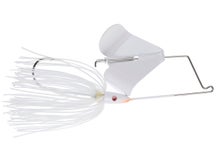
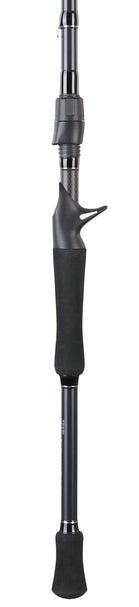
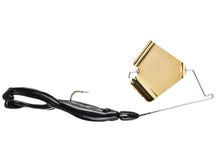
Topwater gear: 7' heavy-action Fitzgerald Rods Stunner casting rod, unnamed casting reel, 20-pound P-Line original co-polymer line, unnamed 3/8-oz. buzzbait (white), unnamed plastic trailer (white).
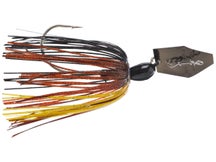
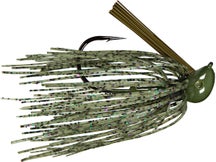
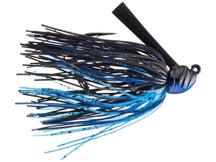
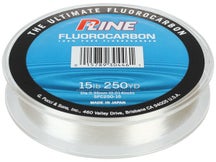
Jig gear: 6'9" heavy-action Fitzgerald Rods Bryan Thrift Series casting rod, unnamed reel, 20-pound P-Line Ultimate fluorocarbon line, 1/2-oz. Damiki Mamaba 2 jig (brown/black), unnamed chunk trailer (matching color).
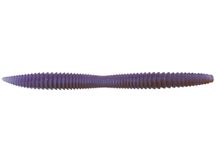
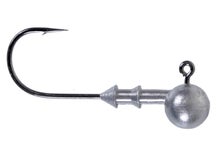
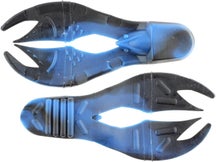
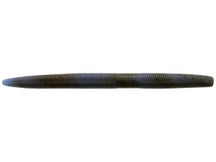
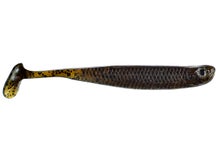
Swimbait gear: 7' medium-heavy Fitzgerald Rods Stunner casting rod, unnamed reel, 8-pound P-Line Ultimate fluorocarbon line, unnamed 3/16-oz. round head jig, 4" Damiki Anchovy Shad (pro blue). He started his days in shallow water, casting his buzzbait and pitching the jig around docks and brush. Later on, he'd move out deeper and throw the 4-inch swimbait over brush and points. He'd count it down and try to keep it in the 10- to 15-foot range. "That was an all-day sort of thing later in the day," he said.
Main factor: "Just having confidence in everything I was fishing - knowing the lake and feeling like I can catch one anywhere. Rarely do I get that feeling anywhere we go on tour."
Performance edge: "My Evinrude never let me down. I was constantly cranking it up, probably 70 to 80 times a day. It worked flawlessly."
Bryan Thrift Wins FLW Costa Series Santee Cooper
Thrift said he didn't accomplish much of anything in the days leading up to the event. "Practice was pretty awful," he said. "I kept looking for them where I thought they should be and trying to make them be where they weren't." He spent some time searching for active spawners, but that was unproductive. "In the tournament, I really had no choice but to fish history. I went to places where I'd gotten big bites before and just started catching them." He visited both lakes on each day of the event and plied a wide variety of shallow cover. He caught weigh-in fish on a crankbait, a flipping stick and a frog and picked up one good one on a rattlebait.
Competition:
Thrift said he doesn't think he caught a single fish exceeding 5 pounds in practice, but the five he brought to the scale on day 1 averaged that number. He began the day running five or six places that were known staging areas for fish bound for the beds, but they produced just a single 2 1/2-pounder. He made a major move at 9 o'clock and started fishing cypress trees, and he had a limit within a couple hours that included a couple of big ones. He added later added two more quality specimens that were enticed by a frog and he settled into 7th place, about 6 1/2 pounds behind leader Scott Canterbury. Day 2 started out like gangbusters. Before 9 o'clock, he'd run some staging areas with a crankbait, flipped some trees and pulled a frog over some vegetation, and all three tactics produced fish in the 7-pound class. A lone 2-pounder was all he managed for the remainder of the day, however. He'd have been atop the field at the cut had he been able to complete his limit, but instead found himself a pound behind new leader Bradley Dortch and also trailing Fisher and Tim Malone by a few ounces. He'd erase all deficits on the final day, though. He popped a 6 1/2-pounder from a staging area in Lake Marion within the first 10 minutes on day 3, and also caught a 3 1/2-pounder and a short fish. He transitioned to the cypress trees and added a 4, then headed down to Lake Moultrie to fish some places he hadn't visited yet. He picked up a pair of 5 1/2s Ð one on a frog and the other on a Rat-L-Trap. He boated some other fish over the next 2 hours or so, but none aided his cause. He left himself an hour to flip some additional trees in Marion on his return trip to the launch, and that paid off in a 7 1/2-pound brute that represented a 4-pound cull and provided his winning margin. "I still didn't think I'd win," he said. "The fish bit a lot better on day 3 and I figured that everybody else was waylaying them. "I figured I had a chance, but I still thought that not having that fifth fish on the second day was going to cost me."
Winning Pattern:
Thrift thinks he caught pre-spawn, spawning and post-spawn fish at various times throughout the event. "I'm sure that some of them were on beds, around the trees and stuff, but I couldn't see them," he said.
Winning Gear:
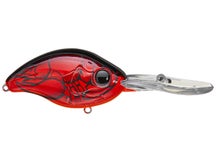
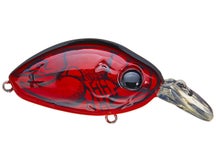
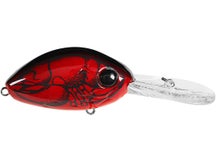
Cranking gear: 7' medium-heavy Fitzgerald Crankbait/Topwater rod, unnamed casting reel (5:1 ratio), 12-pound P-Line fluorocarbon line, Damiki DC-200 (real shad).
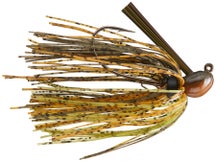
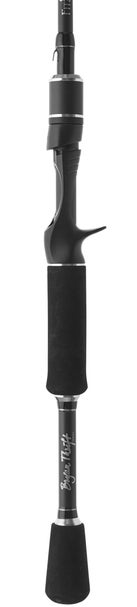
Flipping gear: 6'9" medium-heavy Fitzgerald Bryan Thrift Signature Series Skipping rod, unnamed casting reel (7:1 ratio), 20-pound P-Line fluorocarbon, 1/2-ounce Damiki Mamba jig (brown/blue), Damiki Knock Out or Zoom Super Chunk trailer (green-pumpkin).
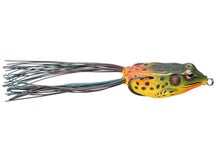
Frog gear: 7'2" heavy-action Fitzgerald Bryan Thrift Signature Series Frog rod, unnamed casting reel (7:1 ratio), 50-pound P-Line XTCB braided line, unnamed 4" buzzing frog (black).
Main factor: "With the lack of a good practice, I'd say it was just knowing how many big fish are in those lakes. It was just fishing with the confidence that every bite could be an 8-pounder."
Performance edge: "The combination of that 6'9" skipping rod and the Mamba jig was a killer set-up. Some of the cypress trees had limbs that were 3 inches off the water that extended out 4 or 5 feet, and it was a big advantage to be able to get the bait all the way to the tree."
Santee Cooper Costa Winning Pattern BassFan 3/15/16 (John Johnson)
Buddy Gross Wins FLW Tour Pickwick Lake
Casey Smith Wins Potomac River FLW Series
Smith's victory can be traced to a decision he made on day 2. He went into the tournament planning to target scattered grass around the mouth of Aquia Creek and then follow the incoming tide north for the rest of the day. On day 1, he had four fish for roughly 13 pounds in the boat by 8:15 a.m., all on a swimbait. "It was a great start," he said. "Things were rolling good." He encountered a lull as the tide went slack and he stuck around the area too long trying to finish his limit. He wound up catching a 1 1/2-pounder, but he regretted not sticking to his plan. "I stayed too long trying to force it," he added, and that put me behind the 8 ball trying to run the tide back north. I felt with the start I had and the 4 good ones I had, I was disappointed. I lost a 3 1/2-pounder that would've culled that small one." On Friday, as he came out of Mattawoman Creek, he hadn't decided if he was going back to his day-1 starting area of if he was going to head north right away. A north/northeast wind had blown into his spot on day 1 where he caught his first four fish. "I debated going back there on day 2," Smith said. "I knew it would be tough, but I knew the quality was down there." Ultimately, he made the call to go south. The wind wasn't as bad as he thought it'd be. "Even if we got down there an it wasn't fishable, there was still time to go north and hit the good tide," he said.
Smith got on a flurry right away and had a limit pretty quick. The good start settled his nerves and reassured him he'd made the right call. "I had a time when I was leaving that area no matter what, but as I fished around, I kept getting bites and making small upgrades," he said. "On Thursday, when the flurry ended, it was over. On Friday, the wind and clouds kept those fish active and kept me there. "I knew it was a risk again, but with the fish I was catching, I knew I was keeping myself in check range and possibly in contention to make the top 10." When the tide went slack, the bites stopped, but as soon as the tide started coming in, "the big ones started to fire," Smith added. "I started to culling out 2- to 2 1/2s with 3 3/4- to 4 3/4-pound fish. That's when I realized what was going on. I realized there was a morning bite and in the afternoon, when tide switched, the bigger fish became active." He wound up bagging a tournament-best 20-00 that put him in the lead entering the final day.
Smith opted to follow the same plan as day 2 on the final day, but he knew he'd have a much shorter window in the afternoon due to an earlier check in time and the better tide conditions being an hour later. "I had from 12:30 until 1:45 or 2, at the latest," he said. "I was going to try to capitalize on the morning flurry and wait out the dead period." He caught everything he eventually weighed by 9:15 a.m., highlighted by a 6-pounder. "After that, it shut down because there was no wind or clouds," he said. "It got sunny and slick." He continued to fish the area, which had been inundated with local anglers. He eventually left for about 90 minutes and returned only to find Charlie Macheck fishing the spot. "We had to communicate as best we could and work around each other," Smith said. "During what I felt was the good window, my co-angler caught a 4 1/2, Charlie caught two big ones and I didn't catch anything. "I was stressing when Charlie and I were communicating. I knew he had a good bag and he caught those two upgrades. I knew I was close. I knew everybody had to catch something, but I knew I didn't close it out."
Winning Pattern:
The area Smith referred called his "winning area" was a grass flat outside the mouth of Aquia Creek. "There were a mix of fish that had migrated out and there were the fish that live there and spawn there," he said. The flat was mostly 4 feet deep, but there was a ditch next to it that dropped into 6 to 7 feet. In practice, he and traveling partner Chris O'Brien met up in the area Monday evening and tried to figure out what the fish were doing. The mapping detail wasn't superb for the area so after O'Brien opted to call it a day, Smith stuck around and idled the entire area, making a more detailed map using Humminbird's AutoChart feature. "The sweet spot was small, but the area was pretty large," he said. "I covered every inch of it. I saw the deeper hole (O'Brien) had described, but also found the ditch that I felt was going to be better." With both the ditch and flat covered in grass, seeing the ditch was difficult due to the small and gradual contour change, but Smith said that's where the bulk of his bites came. He felt like the morning flurry, which happened on the outgoing tide, would've happened regardless of the tide cycle. "There was so much bait and stuff going on there," he said. "I think that goes on there every day, no matter what."
Winning Gear:
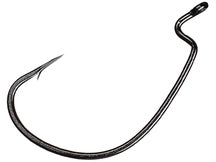
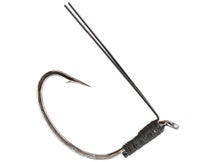
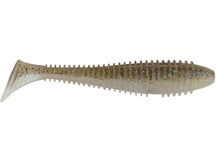
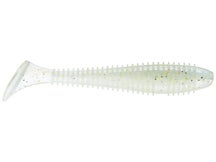
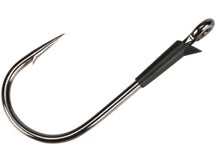
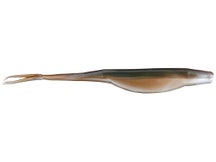
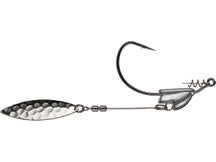
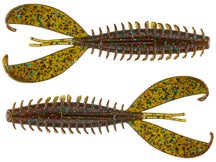
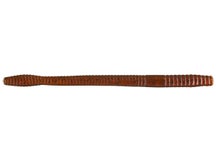
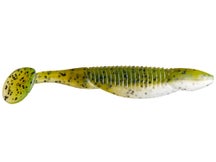
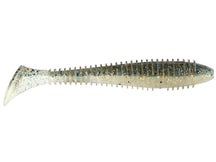
Swimbait gear: 7'6" heavy-action Duckett Fishing Micro Magic casting rod, Shimano Curado casting reel, 15-pound Seaguar InvizX fluorocarbon line, 1/4-oz. unnamed belly-weighted 5/0 swimbait hook, 4.8" Keitech Swing Impact FAT swimbait (bluegill flash). Smith caught "80 to 90 percent" of his weigh-in fish on the swimbait.
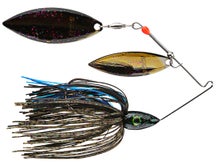
Swimjig gear: 7'6" medium-heavy Duckett Fishing Ghost casting rod, same reel, 50-pound unnamed braided line, 7/16-oz. Gambler Southern swimjg (Killer G), Gary Yamamoto Custom Baits Swim Senko trailer (junebug).
Vibrating jig gear: 7'3" medium-heavy Duckett Fishing White Ice casting rod, same reel, same line as swimbait (17-pound), 1/2-oz. homemade vibrating jig (white/watermelon), 4" Keitech Swing Impact trailer (white). His 6-pounder on day 3 fell for the vibrating jig.
Potomac River Winning Profile BassFan 6/21/16 (Todd Ceisner)
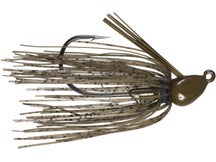
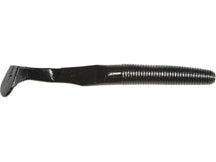
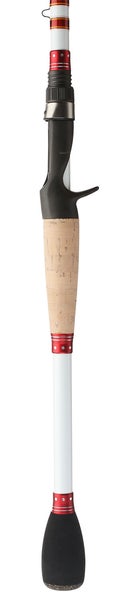
Cory Johnston Wins FLW Costa Series Oneida Lake
Johnston spent a full week at Oneida prior to the tournament and he came in expecting to have to find ways to catch both smallmouth and largemouth. "I was expecting it to be predominantly smallmouth, but I definitely planned on looking for largemouth because if you can catch largemouth there, I knew they'd be good, but you're not going to catch a ton of them," he said. It didn't take him long to pick up his first clue for the smallmouth. "On the first day within the first 10 minutes, I found the pattern right away," he said. "I focused on isolated rock piles predominantly. It was flat calm and the water was clear and I was able to put the trolling motor on 100 and cover water. I could see the fish so that's what I went with." Sight-fishing in August? "We do it at home all the time," Johnston noted. "Any time you're on a northern, clear lake, there are always some fish shallow." When his brother, Chris, arrived a couple days later, they divided the lake and tried to duplicate the pattern elsewhere. He tried to augment his shallow rock pile plan with deeper options, but nothing compared to what he'd found in 10 feet of water or less. "Basically, there's a ton of grass there and the fish were around the bare areas on the bottom where the rock is more dense and weeds were not able to grow," he said.
Competition:
The first two days went as well as Johnston could've hoped. The weather was stable and the winds were negligible and that allowed him to pick apart the shallow areas that others were overlooking, he said. "It worked all over the lake and it was nice because guys weren't keying on it," he added. "They'd fish through an area, but weren't dialed in on the sweet spots where fish were sitting." His first fish Thursday was a 3-pounder caught on a topwater popper. "That got the ball rolling," he said. "I knew exactly what was happening. The water was clean at that point and it was a matter of time before the sun came up and I could see the fish and start picking them off." He caught half of his weigh-in fish during the event on a 3 1/2-inch tube that he'd cast to targeted bare spots. He also mixed in a dropshot and caught a key largemouth on each of the first two days with a wacky-rigged 4-inch soft stickbait around docks. His 17-06 day-1 stringer had him tied for 2nd, one ounce off the leader's pace. He tacked on 18-13 on day 2 to move into the lead with 36-03. He averaged 10 to 12 bites a day both Thursday and Friday, but backed off some key areas on day 2 once he had a solid limit.
"I fished all the same stuff (on day 2)," he said. "I started on the east end every day and worked way back. I had about 40 spots I'd hit, but I tried to save as much as I could to prolong it." The final day was more of a challenge with the wind coming up. It forced him to target deeper water and where the wind hadn't dirtied the water. "That threw a fork into the game plan," he said. "I fished more in the moment than what I'd found in practice. I couldn't see the fish because the water was dirtier. There were three-footers rolling into my areas." He relied mainly on dragging tubes Saturday, but also mixed in an umbrella rig that netted him a few 2-pounders. He totaled 14-01, which he didn't would be enough to clinch the win. The 14-01 was the best effort on the final day and it resulted in a 4-pound victory. "I was a little bit surprised (I'd won)," he said. "I didn't think I'd win after the day I had Saturday. I knew I was on the right fish. I just had to get a little lucky."
Winning Pattern:
Because of the amount of vegetation surrounding the hard spots he was targeting, Johnston said it was imperative that he land his bait right on the sweet spot to trigger bites. "You had to land it in the target," he said. "They were all surrounded by grass and snot on the bottom. The fish were very spooky, but in certain areas it wasn't as bad because there was so much grass. You could get on top of them more."
Winning Pattern:
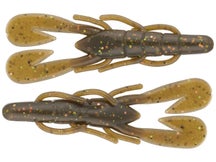
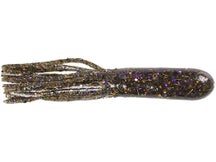
Tube gear: 7'5" medium-action G. Loomis E6X spinning rod, Shimano Sustain 2500 FG spinning reel, 8-pound PowerPro braided line, unnamed 8-pound fluorocarbon line (leader), 3/8-oz. homemade tube jig, 3.5" Strike King Coffee Tube (green-pumpkin).
Topwater gear: 7' medium-heavy Shimano Crucial crankbait rod, Shimano Metanium casting reel, 20-pound PowerPro braided line, Jackall Binksy (HL Chart Strike Gill). When he threw a dropshot, he fished a Jackall Cross Tail Shad.
Main factor: "Definitely the time (I spent) on the water and being able to dial in what was going on and finding something that guys weren't keying in on."
Performance edge: "The header on my Garmin electronics was really key. There are lines set at 50 and 100 feet away from your waypoint and you can tell how far you are from it. That allowed me to make pinpoint casts and I was not wasting time trying to find it."
Duke Jenkel Wins FLW Costa Series Lake Of The Ozarks
Jenkel's experience at Lake of the Ozarks was limited, but he had competed in a BFL Regional there last October so he had some inkling as to how the lake might set up in the early fall. "I still had trails and waypoints and figured if I was struggling, I'd plug some of those in," he said. Prior to the final day when he acted on Morehead's tip, Jenkel described his practice as "miserable." The water was warmer than anticipated (mid 70s), but once he discovered the key ingredients to his pattern the day before tournament started, he hoped he could build on it. "I felt like I'd developed a pattern," he said. "I had an idea what the fish were doing, but I wasn't sure where it would go down. I had an idea how to approach the day of fishing." He said the key elements he discovered in practice were the presence of bait fish around docks situated on flatter banks about halfway back in creeks. "I know it sounds ultra simplistic," he said, "but if you got back there and found an isolated dock and hit a certain depth of water, you could tell it might be good." He caught keepers out of four different areas using the same criteria on the final day and decided he'd run with it during the tournament.
Competition:
At the start of the tournament, Jenkel never imagined he was on the winning fish. There was a front that brought some rain and wind last Thursday that ended a string of stable, sunny days in practice. He started day 1 of the tournament trying to plan for the worst as he opted to start in a creek that he had fished last fall because it had a marina in it where he figured he could seek shelter if the thunderstorms turned violent. "I hadn't made a cast in there," he said. "I started there strictly based on history. I'd caught some fish in there last year. It was about a mile from where I wanted to start. "I knew that creek had some fish in there, but I also knew I'd have a place to get out of the weather at least. The weather was moving fast." He applied what he'd discovered in practice to that area and came out with a limit by 10:15 a.m. He fished two other areas and totaled eight keeper bites that day. "I truly felt like I had pattern to run," he said. "It was matter of knowing if I'd run into enough of them. The quality was pretty astounding." After starting with a topwater in the rainy conditions, he stuck with flipping a jig tipped with a creature bait trailer and a tube on day 1 and eventually culled up to 14-04. "It put my nerves at ease," he said. "Compared to practice, I was 10 feet off the ground. I went from zero to hero in my mind. I knew it wasn't enough weight, but I was pleased with how the day had started." The rains stopped for day 2, but the clouds hung around and that prompted Junkel to start with a topwater again for the first hour. He opted to scrap that after watching his co-angler land three 3-pounders with a flipping rod. He returned to the same starting area from day 1, but went another hour without a bite. He had considered leaving before he made a switch to a big finesse worm on a shaky-head jig. After breaking off in some brush, he changed to a Texas-rigged finesse worm. He started to pitch that around the same docks and within three hours he had a limit.
"On day 1, they weren't really tight on the docks, but maybe the fishing pressure or weather caused them to get tighter to the cover on day 2," he said. "They were tucked back under the docks and were in the center of some slips." He also started to learn which dock slips had brush under them and he found one dock corner to be markedly better than others. "I had one corner of one dock that produced two 4s, a 3 1/2 and a 3, all within five feet of the corner," he said. "There was a little gap in the floats and a little bit of brush under that one." He wound up with 19-14 and climbed into fifth place after day 2. He returned to the marina to start the final day and within the first half hour, the sun had started to come out and he caught a 4-pounder and a 5-pounder. "At that point, I was like, 'Let's not get in a hurry to leave,'" he joked. After an hour-long lull, he caught a chunky 15-incher that proved to be his smallest keeper of the week. Another 45-minute lull prompted him to think about leaving, but he wanted to make one more pass by the dock corner that had been so productive. He skipped his worm under the dock and when he picked his rod up, there was another 4-pounder attacked to it. "I don't know what's there, but it's the best corner of any dock I've fished in my life," he said. He finished his limit with a 2 3/4-pounder before noon, which proved to be his last keeper of the day. "I figured I was a 5-pounder away from wining," he said. "It never happened. I drove the whole way back to the ramp thinking I'd let it slip away." As the final-day weigh-in proceeded, other finalists began to approach Jenkel and offer their congratulations. It was an uneasy feeling, he said. "When Dion (Hibdon) came up to me said, 'Congrats, bub,'" Jenkel said, "I started to get a sense that I may have pulled this off."
Winning Pattern:
Jenkel said most of the docks that were the most productive had between 5 and 9 feet of water under them. "You needed to get around somewhat shallower water, but 8 feet was the magic number," he said. "I wanted shallower water toward the bank with a flatter bank. The presence of bait was huge, too. When you got into a creek and saw a couple fish busting bait in the middle, you knew it was the right spot." He figured at least 10 of the fish he weighed in came out of that marina, which he later learned was a release site for the Anglers In Action Big Bass Bash, which took place Oct. 1-2. "There was no doubt some of them looked beat up, but they weren't all released fish I was catching," he said. "Some were pretty and green." On day 2, Jenkel realized other competitors fishing in the same area weren't having the same success that he was. He was able to go behind other boats and catch qualify fish. "Guys were asking me if I was getting bites," he said. "I wasn't getting a ton of bites, but I realized they weren't putting their baits in the same places as I was. I think the fish were pretty aggressive on day 1 with that front coming through and guys thought they'd bite well in there all day. "On day 2, things tightened up and as I paid more attention to how other guys were fishing, they were pitching up into the same places, but they weren't catching them. Some guys were beat up between the ears."
Winning Gear:
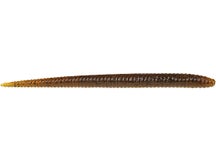
Worm gear: 7'1" heavy-action Powell Max 3D casting rod, Lew's Tournament Pro casting reel, 15-pound Seaguar InvizX fluorocarbon line, 5/16-oz. unnamed worm weight, 4/0 Gamakatsu round-bend worm hook, Zoom Magnum Trick Worm (red bug and watermelon candy).
Jig gear: 7'7" heavy-action Powell Max 3D casting rod, same reel, same line (25-pound), 1/2-oz. Lunker Lure Limit Series jig (Cumberland craw), Strike King Rage Tail Bug trailer (watermelon red). He also flipped a 4" Gambler tube (green-pumpkin blue) under a 5/16-oz. weight with a 4/0 Gamakatsu heavy cover flipping hook.
Main factor: "I was fishing a way I was very comfortable with. I'm typically a shallow-water guy, very target-oriented. Pitching and flipping is something I like to do and something I'm okay at. A lot of Illinois fisheries are pretty tough so even when I had a lull, I felt like was around the right fish. It didn't spin me out. I kept my head down and kept at it."
Performance edge: "On the final day, there was a poker run on the lake and it seemed like every 30- and 40-foot boat in the world was on the water. I run a Phoenix and I couldn't be more pleased with how it handled the rough water."
Lake Of The Ozarks Winning Pattern BassFan 10/11/16 (Todd Ceisner)
James Waston Wins Norris Lake FLW Tour Invitational
Watson had never been to Norris prior to his arrival for practice. Some information he'd gotten a couple of months earlier from a semi-local named Joe Lee, whom he'd become acquainted with through the now-defunct PAA Tournament Series, proved invaluable. "We fished together at Douglas and we kind of fish similarly, and I asked him to grab a Norris map and circle some stuff that I'd like," he said. "He pointed me in the right direction. It wasn't 'fish this bank right here,' it was more just this general area and that general area. "He knew I'd figure it out once I got a look at it, and it worked." He caught two fish on each of the first 2 practice days, then spent the rest of the time throwing baits that either had their cooks covered up or removed. "Both days I had two quality bites and a handful of other bites that really dialed me in. I don't need to catch 17 or 18 pounds in practice to know what I'm going to do - I just need a few key bites to give me those clues. I think a lot of people make the mistake of catching fish in practice that they could use in the tournament." His best action came from an area known as Loyston Sea. The mile-wide stretch is at the site where the town of Loyston sat before the Clinch River was dammed to form Norris in 1936. The key features were silt or mud banks that transitioned to rock, and the juncture had to be flat rather than the severe slopes that surround most of the lake. Big gizzard shad were hanging out there and the bass were feasting on them. "When I'd run my trolling motor, they'd be jumping out of the water like Asian carp," he said of the baitfish. He could catch the bass, which were holding in 0 to 3 feet of water, with a variety of topwater offerings.
Competition:
Watson relied on three key stretches of bank on days 1 and 2. "Those places actually reloaded better than the Ozark lakes do," he said. "I ran new water every day, but all 3 days I cycled back through my best areas." He averaged nearly 13 1/2 pounds through the first 2 days and had a 1 1/2-pound lead when the field was cut to the Top 20 for day 3. He caught a quality smallmouth on a spinnerbait early in the final round from a place he'd visited in practice, but the remainder of the day was a struggle. With his best areas seemingly having dried up, he ran to a big bay up the Clinch and boated three run-of-the-mill keeper largemouths. He later learned that the bay had been fished hard by three other competitors who made the Top 20. With 10 minutes remaining in the day, he had 9 pounds in his livewell - an amount that he was certain would not be sufficient to win. He then caught two more largemouths on a River2Sea Whopper Plopper that improved his total by just a couple ounces each, but it was enough to hold off Lambert.
Winning Pattern:
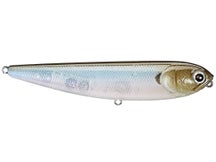
Watson said he made super-long casts with his topwater baits in order not to spook the extremely shallow fish. He also downsized his braided line from 65-pound to 50 for the same reason. "That worked because I didn't have a bunch of obstacles in the water," he said of his line-size reduction, "but I did break off with braid for the first time ever on some zebra mussels." He caught a couple of weigh-in fish flipping boat docks and a couple on a Spook-style River2Sea Bubble Walker.
Winning Gear:
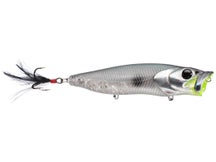
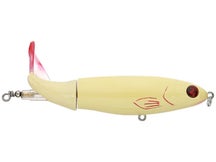
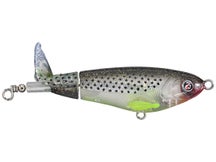
Topwater gear: 7'10" heavy-action Waft Fishing rod, casting reel (7:1 ratio), 50-pound Maxima braided line, River2Sea Whopper Plopper (loon). The Whopper Plopper accounted for eight of the 15 fish he took to the scale. Several others were enticed by a War Eagle Buzz Toad with a Luck-E-Strike Frantic Frog trailer (black). The spinnerbait he used to catch the key smallmouth early on day 3 was a 3/8-ounce Luck-E-Strike Rick Clunn Trickster with a gray skirt.
Main factor: "Just dialing into the type of stuff I needed to be looking for."
Performance edge: "Some people might think that 7'10" Waft rod was overkill for what I was doing. I'm always open to criticism and becoming better, but I think I've got the right rod, reel and line setup for the Whopper Plopper and the Buzz Toad."
Jason Lambert Wins FLW Tour Kentucky Lake
John Cox Wins FLW Tour Lake Hartwell